
What is Backtesting?
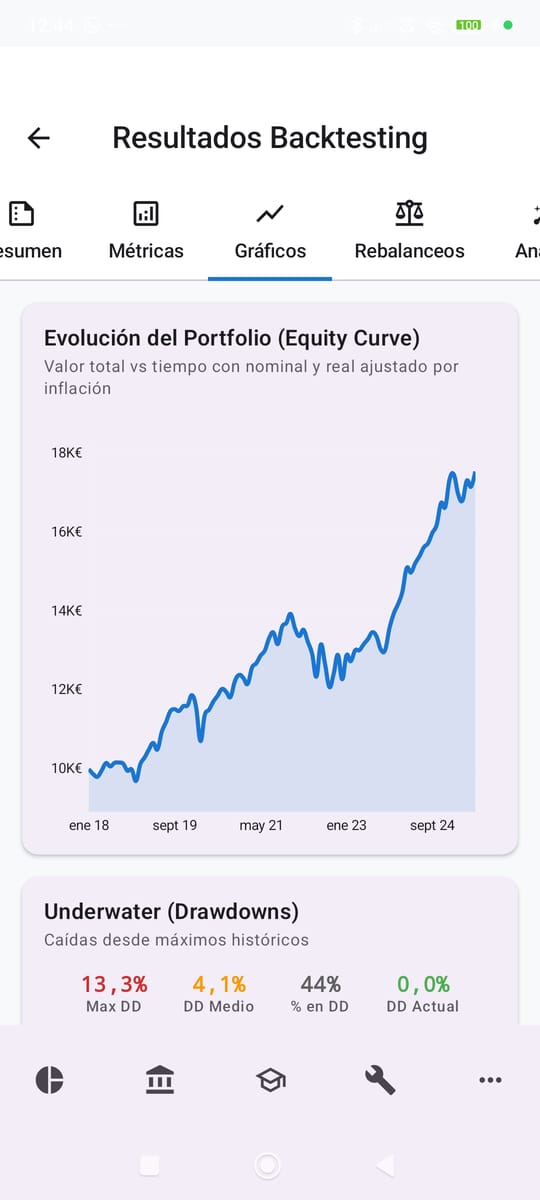
Backtesting is a technique that simulates how an investment strategy would have performed in the past using real historical data. In our app, you can analyze the Permanent Portfolio's performance from 2009 to the present.
Why is it important?
Before investing your real money, it's essential to understand:
- Historical performance: How much would you have gained or lost?
- Volatility: How much does your portfolio value fluctuate?
- Maximum drawdown: What's the largest drop you could experience?
- Rebalancing effect: How does rebalancing affect your returns?
Step-by-step guide
1. Select your portfolio
Our tool offers three Permanent Portfolio variants:
- Europe: European ETFs in EUR (UCITS)
- USA: American ETFs in USD
- Harry Browne: The original version with American assets
2. Configure parameters
Initial capital: The money you would start investing with. You can test from €1,000 to €100,000.
Monthly contribution: If you plan to invest regularly each month, include it here. This simulates the DCA (Dollar Cost Averaging) effect.
Dates: Select the period you want to analyze. The longer, the more representative the result.
Rebalancing threshold: The maximum deviation allowed before rebalancing. 15% is the classic value recommended by Harry Browne.
3. Run the simulation
Click "Run Backtest" and wait a few seconds while we calculate:
- Final portfolio value
- CAGR (Compound Annual Growth Rate)
- XIRR (Internal Rate of Return considering cash flows)
- Annualized volatility
- Maximum drawdown
- Best and worst year
- Number of rebalances performed
4. Interpret the results
Final value vs Total contributed: The difference is your net gain.
CAGR: 5-7% annually is typical for the Permanent Portfolio.
Maximum drawdown: If you see -15% to -20%, it's normal. The Permanent Portfolio is designed to limit drops.
Number of rebalances: Few rebalances mean the portfolio stays naturally balanced.
Advanced tips
Experiment with different scenarios
- Try different start dates (2008 crisis, 2020 COVID)
- Compare with and without monthly contributions
- Adjust the rebalancing threshold
Backtesting limitations
Remember that:
- Past returns don't guarantee future returns
- Historical data doesn't include all real costs
- Market conditions can change
Next steps
After analyzing the backtest, you can:
- Download the app to manage your real portfolio
- Use the FIRE calculator to project your financial independence
- Read our complete guide on what is the Permanent Portfolio to better understand the strategy
Have questions? Contact us and we'll help you interpret your results.
![How to Implement the Permanent Portfolio Step by Step [2025]](/images/blog/cartera-permanente-implentar-06.webp)